

Global inevitability: Ukrainian pig farming in conditions of ASF
African Swine Fever (ASF), unfortunately, has become an inevitable reality for Ukraine. Although the first outbreak of the disease in the country was 8 years ago, pig farmers continue to operate their businesses under constant threat of losing everything. Not all producers withstand the trial – some are leaving the market. Complicating the situation was the fact that companies could not insure their risks until recently. In his blog, Dmitry Dubovikov, Director of the Swine Department of the VITAGRO group of companies, discusses how Ukrainian pig farmers protect themselves from ASF and who has a better chance of survival.

Dmitry Dubovikov, the blog author, is the Director of the Swine Department at the VITAGRO group of companies.
Global Impact
African Swine Fever cannot be a problem for just one country or one company. In one way or another, this disease has affected the global market and its players. And this concerns not only disease prevention measures. ASF directly or indirectly influences the strategic plans of pig farming companies. For example, as the global pig population has significantly decreased due to ASF, prices and demand for breeding stock have risen. Therefore, some pig farmers who were previously only involved in cultivation have started opening breeding farms.
There is no longer any point in digging and searching for those responsible for ASF entering Ukraine’s territory. I think it was inevitable. Because despite all the inspections at customs checkpoints and other measures, it is impossible to control wild boars from crossing the country’s borders.
Therefore, it has to be acknowledged that the ASF problem will persist until a vaccine for this disease is invented.
And until then, outbreaks will occur periodically in various countries and regions of Ukraine.
In general, over the past 2-3 years, Ukrainian pork producers have become more resilient because they understand the potential losses they could incur. According to information from the European Bank for Reconstruction and Development (EBRD), estimated losses from ASF per head are: $114 on household farms, $196 on small and medium-sized pig farms, and $460 on large industrial complexes. It’s worth noting that in the Khmelnytskyi region, where our farms are located, the last outbreaks of ASF were 2 years ago. So, evidently, companies have been investing in biosecurity measures and have become less vulnerable recently.
Companies are making efforts to prevent the possibility of disease entry onto farms through animals, humans, and feed. Enterprises are investing in the granulation of compound feed – treating feed at a temperature of 60°C (as the ASF virus is not resistant to high temperatures). Many have implemented additional security measures at the sanitary checkpoints of the enterprises. Some have adopted shift work with weekly rotations, reducing the rotation of people and the risk of disease entry onto the premises through employees.
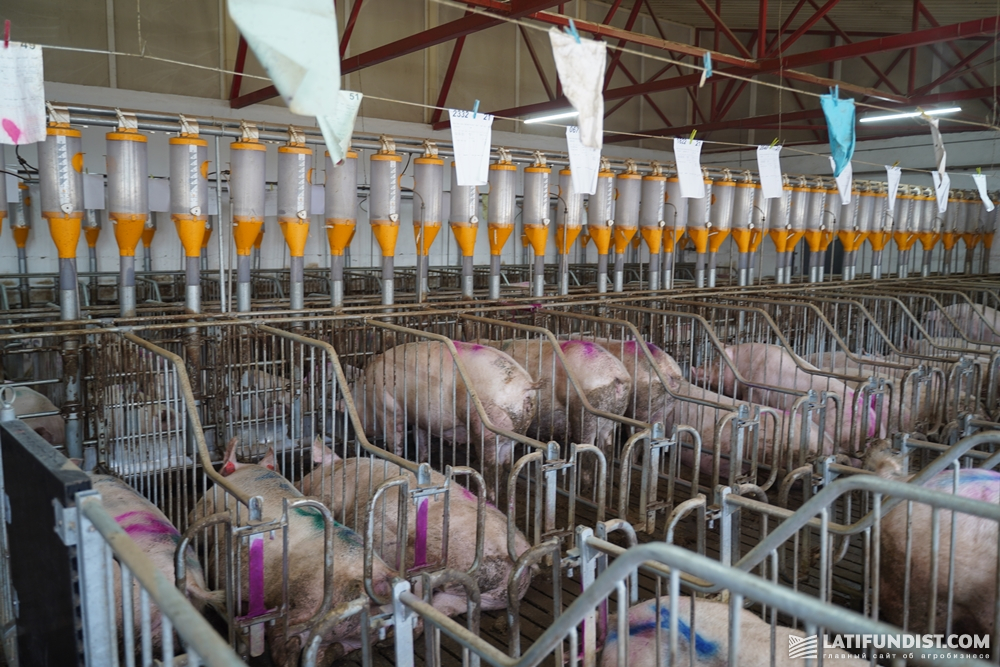
The pig farm of the VITAGRO group of companies.
At our VITAGRO pig farming complex, we also utilize feed granulation. Regarding employees, even before the increased cases of ASF, they were prohibited from keeping pigs in their yards. Our company’s security service monitors this. Additionally, we do not allow employees to bring food products onto the farm because regular sausage can become a source of disease for animals on the premises. Therefore, all workers at our facility are centrally supplied with food that has undergone appropriate checks.
In reality, the costs of all biosecurity measures are minimal compared to the losses a company can incur in the event of ASF entry.
“In the cost structure of pork production, expenditures on anti-epidemic measures account for 1-2%.”
At the state level, continuous monitoring of ASF is also conducted: producers regularly take and submit blood samples from animals for analysis. This activity helps control the spread of the virus in industrial pig herds. Overall, the situation in the country is controlled mainly by pig farmers themselves, who are interested in preserving their business.
Impact of ASF on the Market
ASF certainly affects the structure of the Ukrainian market and the composition of players. The number of pork producers in the country is decreasing. Of course, each entity decides for itself, but I believe that companies without the means for biosecurity measures would be better off gradually reducing their herds to zero and exiting this business, as the risks are too high.
In principle, the existing taxation system in the country can also motivate players to make such decisions. After suffering losses from ASF, companies not only do not receive compensation from the state but also must pay a certain amount to fiscal authorities as lost income.
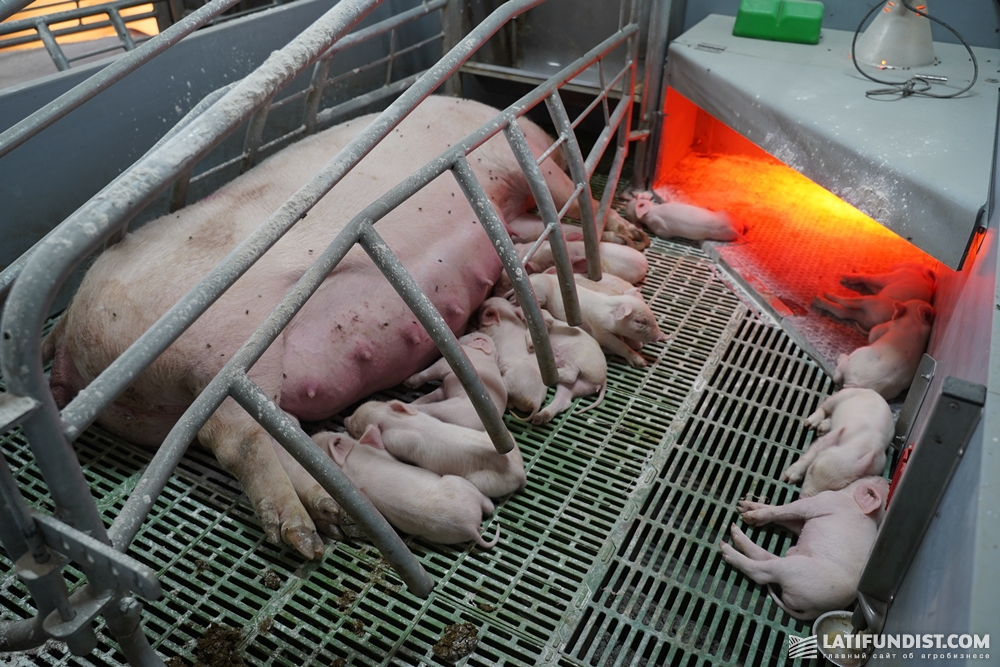
Pigs at the VITAGRO group of companies’ farm.
As far as is known, only one company in Ukraine has managed to insure its risks. This is “Galychyna-Zakhid” – an enterprise with Danish investments from the Lviv region. Unfortunately, no other pig farmers are insured yet. It should be noted that the possibility of insuring enterprises and livestock against ASF in our country has emerged quite recently, with assistance from the relevant Association. Therefore, if anyone believes that a pig farming enterprise can use ASF as a cover for some financial maneuvers, this is impossible. Even with insurance, without state compensation, the producer could face even greater penalties.
Of course, if the government were to establish compensation for enterprises suffering losses from ASF, it would be a significant support for market participants. Although, it must be acknowledged that there are already certain government programs in place to support livestock farming in the country. These include compensation (30%) for the cost of reconstructing and building livestock complexes, compensation for the value of breeding stock, as well as reimbursement of interest rates on loans, etc. However, I can say that these programs are already insufficient. The rapid rise in grain prices, which is throwing many producers off balance, is now an even more pressing issue than ASF.
It is known that the profitability of pig farming is cyclical. Once every 4-5 years, production profitability approaches zero. Due to the increase in grain prices, the current year is quite challenging for pork producers. Feed costs account for 70-80% of the cost structure of pork, so the increase in grain prices significantly affects the cost of meat. In such conditions, enterprises with a full reproduction cycle (from sow to finishing pig), as well as feed production, find it easier to manage costs. Because they are not dependent on changes in piglet prices and can optimize feed costs by substituting one ingredient for another. Enterprises that do not have the ability to reduce costs find it more difficult to compete. These are the realities of the market.
Dmitry Dubovikov, Director of the Swine Department at the group of companies. VITAGRO
Source:latifundist.com