

How it works: the new VITAGRO Nutrition feed production plant

“The Podolian Switzerland” is the name given to one of the picturesque corners of the Khmelnytskyi region – the Podolian Tovtry. And it was there that a team set out on one cold winter day. Latifundist.com.
On the way, we joke that our publication could already become a guide to the regions of Ukraine – we’ve racked up so many kilometers. But we’re not traveling to admire the hilly landscapes, especially since the weather isn’t suitable for that. Our goal is to get acquainted with the work of a new factory for the production of animal feed and feed additives VITAGRO Nutrition The group of companies VITAGRO. Get comfortable, you haven’t seen anything like this in Ukraine yet.
Introduction to the company
Ten years of successful livestock business operation by VITAGRO led to the integration of feed and feed additives production. This gave rise to a new company, VITAGRO Nutrition, specializing in the manufacturing of ready-made compound feeds, premixes, and concentrates. The decision was made to build the production facility in an environmentally clean region, far from industrial facilities (for reference, the nearest such facility is located 150 km away), in accordance with the globally recognized GMP+ standards (ensuring the safety of various feeds, ingredients, premixes, compound feeds, as well as food additives for animals).
The factory’s capacity allows for the production of 25 tons of finished product per hour or 12,000 tons per month. Out of this volume, around 7-7.5 thousand tons of compound feed are used for the company’s own needs. Moreover, the technical equipment enables the manufacturing of a wide range of feed formulations for various age groups and different types of animals. The majority of the products offered on the market by the company are used in feeding its own livestock.
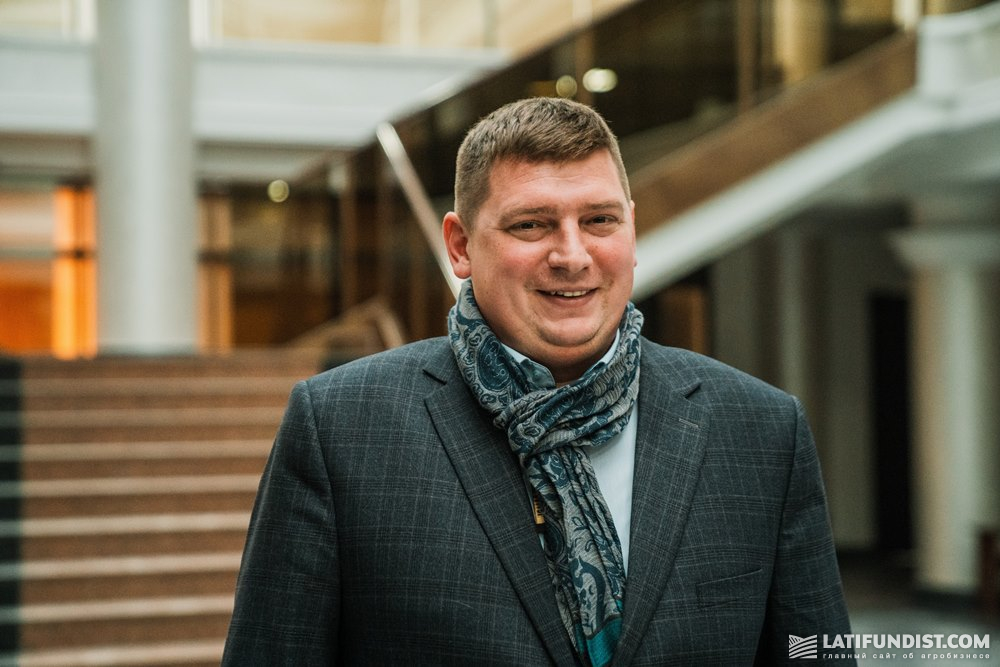
“Currently, the factory is capable of producing finished compound feeds, concentrates (protein-vitamin-mineral supplements) – these account for 10-30% of the finished feed and serve as supplements to grains, as well as premixes ranging from 2% to 5%, which complement the grain and protein groups. We have focused on the product line in which we are confident and can guarantee quality to our partners,” says the director of VITAGRO Nutrition.Sergey Sulima.
Biosafety
A feed mill starts with a control checkpoint. Many vehicles, including those loaded with raw materials, are parked at the approach to the production area. It turns out that entry for passenger cars is strictly prohibited on the premises. Trucks are allowed entry only after samples of grain are taken and analyzed for organoleptic indicators, moisture content, and the presence of pests. If the raw materials pass inspection, the next stop is the stationary wash station.
According to Sergey Sulima, such a wash station operates much more efficiently than a regular decontamination barrier or wheel treatment from a sprayer. First, a technical wash of the vehicle is carried out, followed by the main disinfection using disinfectants. Then the vehicle must stand on a special platform for 30 minutes to 1.5 hours, depending on the disinfectant used.
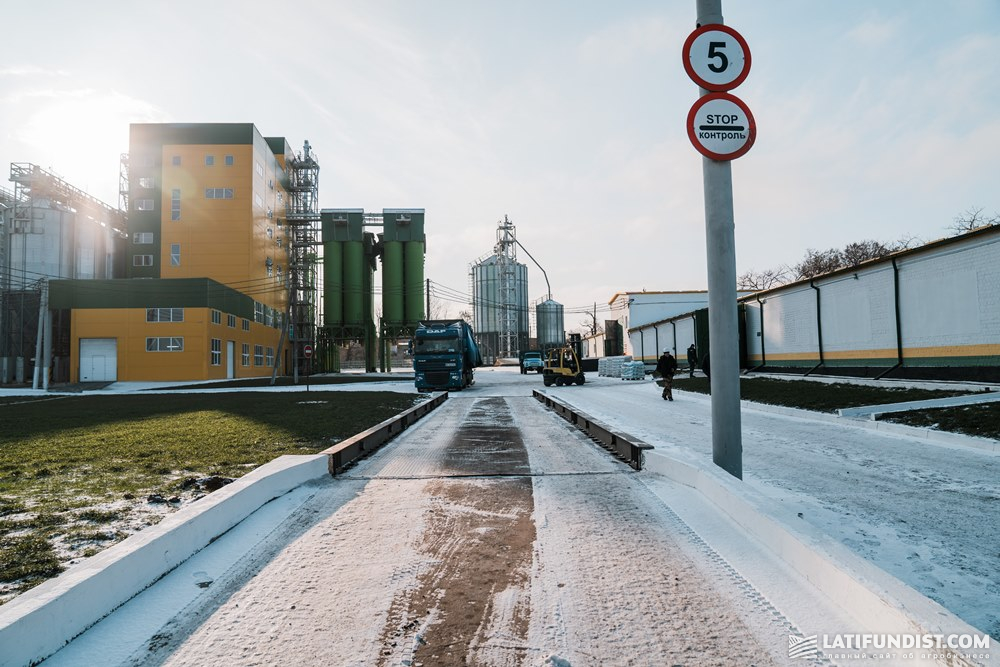
There are nuances for workers as well. At the checkpoint, using a frame decontamination barrier, all clothing is treated. Then, in the administrative building, they change into work clothes. If it’s a green zone (directly related to production), a person must complete their shift without contact with the environment.
The same procedure applies to transport servicing the production: vehicles from the red zone are not allowed into the green zone. All of these measures form a comprehensive biosafety protocol at the plant.
The director of VITAGRO Nutrition
«Мы обеспечиваем уровень биобезопасности в соответствии со стандартизацией GMP+, потому что некоторые продукты нацелены на экспорт в страны Европы. И для них стандартизация GMP+ должна быть не только на бумаге. А так европейские покупатели приезжают к нам на производство и видят, что мы соответствуем этому стандарту».

Procurement and storage of raw materials
Continuing the tour of the plant. After an hour and a half since the vehicle with raw materials was treated with a disinfectant, it can now proceed to the scales, and from there, to the floor or silo storage warehouses.
“Since we do not use animal-derived proteins in the production process, they do not enter the production area. All warehouse storage is organized in such a way that ingredients for compound feeds requiring similar storage conditions are located in one place.”
The plant partially sources grain and protein ingredients from its own facilities and partly from farmers. Purchases are made for the entire marketing year (the entire volume of wheat is purchased in October, while corn is purchased in January-February). Raw materials are stored in the company’s own elevators. This way, the company not only insures itself but also ensures that high-quality raw materials are used in production. There are 6 silos for the operational storage of grains installed directly at the plant. This volume is sufficient for 1-3 months of operation.
As for vitamins, minerals, enzymes, probiotics, and prebiotics, they are procured through tenders on a monthly basis. Amino acids are currently purchased for 1-2 months, but the company aims to increase the safety stock to 3-6 months in the future.
In the control room
We are in the heart of the plant – the control room, where automatic control of all production processes takes place: from raw materials entering the silos to the shipment of the finished product.
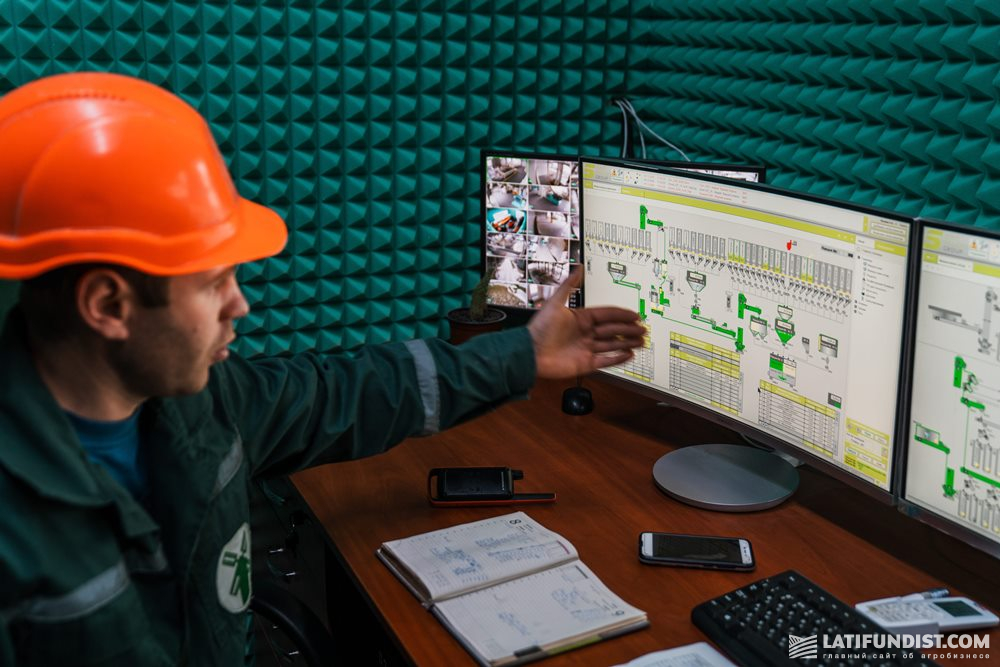
Typically, most production issues arise due to the so-called human factor. The implementation of automation helps to avoid such situations. This system doesn’t get sick, take vacations, or get lazy; it ensures accurate weighing, crushing, mixing of all components, and dispensing of the finished feed according to the specified recipe.
«The factory’s software not only allows us to control production but also to analyze its performance. After each batch, we can see which ingredients were used, whether there were any deviations, how much time was spent mixing the batch, and so on. We also have access to other analytics needed to understand the quality of the compound feed or feed additive. In other words, we monitor every kilogram of our compound feed.
At the control panel sits shift operator Andriy Vozovik. On the screens in front of him, he can see all the details of the production process.
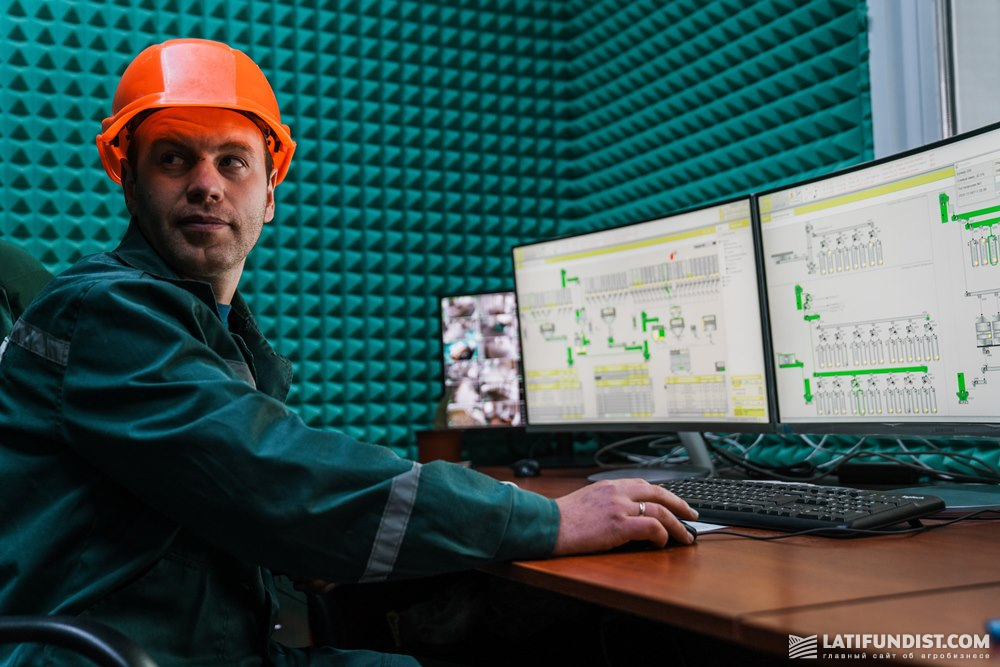
Andriy Vozovik, shift operator” explains: “It all starts with loading the raw materials into the silo. I check how much raw material was loaded into each bin. All our bins are equipped with sensors, which allow us to monitor their fill level. Then, I find the recipe prepared in advance by the technologist, input it, and set it in motion. I ensure that no errors occur during the feed production process, and if they do, I promptly address them.
Next to him is technologist Olga Shermat. Her tasks include developing and modifying recipes, as well as entering them into the program’s database. She is also responsible for optimizing all technological processes at the plant, specifically grouping types of products (to avoid contamination between them) and the step-by-step production of compound feeds. For example, ensuring that a separate silo and line are used for the production of starter feed.
On the production floor
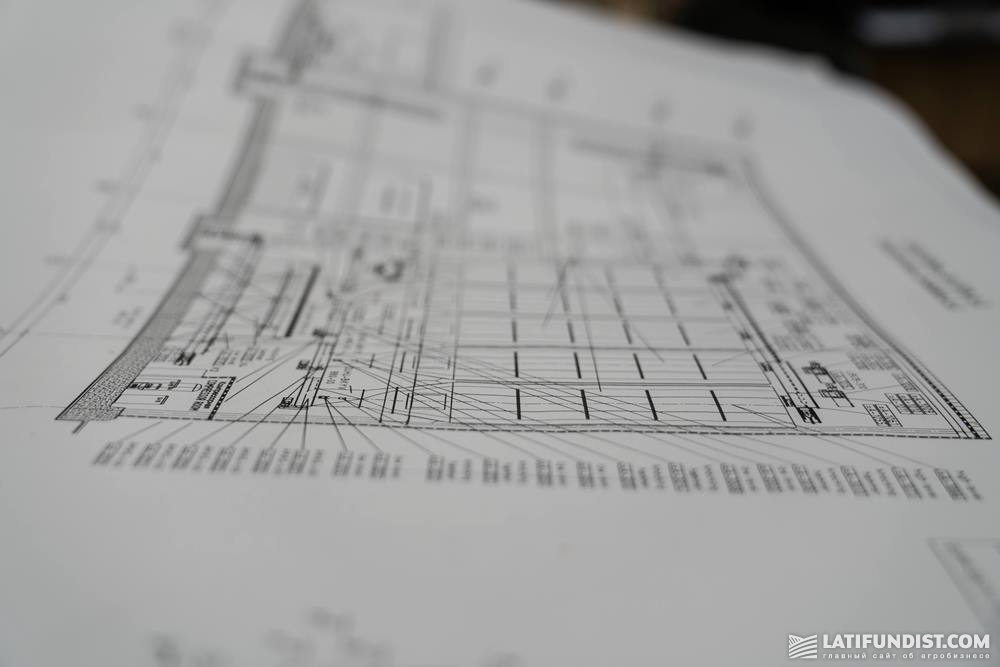
From the control room, we proceed directly to the production floor. It is built using Swiss technologies from Buhler AG and equipment from Van Aarsen International B.V.
The director of the VITAGRO Nutrition plant
“The plant utilizes a vertical production system, where raw material loading occurs from the top, followed by dosing, ingredient mixing, dispensing, and packaging. This vertical production approach enables achieving maximum homogeneity of any product manufactured on this equipment.”

We head to explore the production processes. From the grain storage, the raw material is fed into the silo unit and weighed on a dosing unit. At the grain weighing section, there is a weighing module from Buhler. Sergey Sulima explains that currently the weighing error is 500 g per 2 tons, which corresponds to the maximum accuracy of this equipment. He also notes that few achieve this level of accuracy in feed production facilities.
For dosing amino acids, vitamins, and other components used in feed, an automated Buhler installation is used, consisting of 32 dosing hoppers and two scales. We are told that it represents the latest in dosing technology. However, even visually, the installation is impressive: it looks like something out of a spaceship. On this section, high dosing accuracy is also achieved, with an error margin of just 5-10 grams.
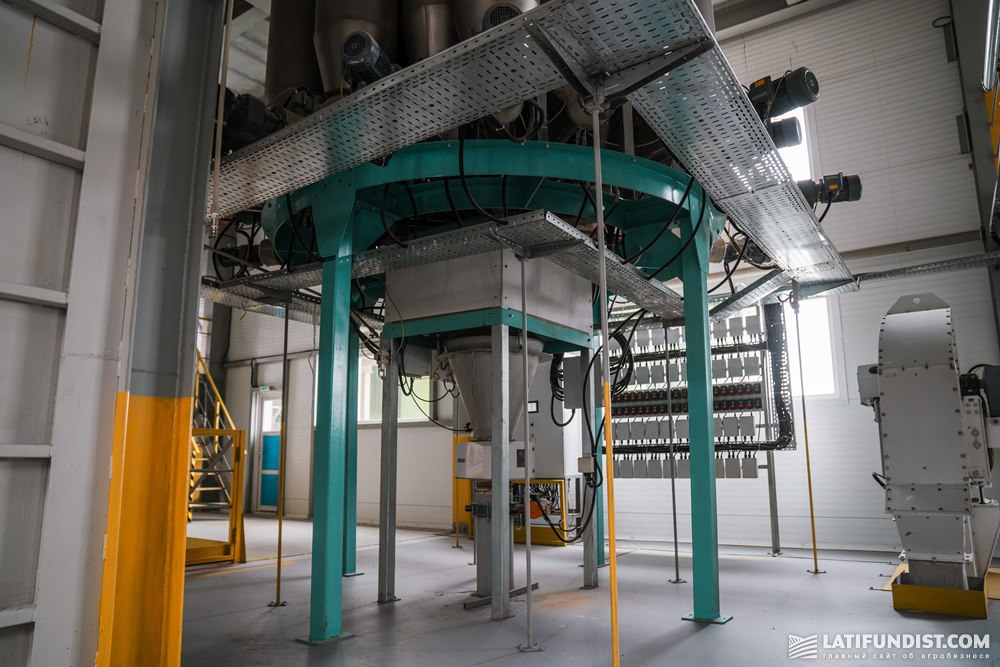
All the raw materials that arrive on the floor for filling the hoppers will be used on the same day based on batch production principles. Moreover, the filling process takes place strictly under the supervision of the technologist.
“The process is highly automated. The operator provides the mechanism for filling to a specific hopper with a specific number, then indicates which raw material is in that hopper, and only then proceeds with the filling. To prevent people from inhaling the ingredients during filling, there is a suction mechanism. This means that dust from the raw materials is sucked into an aspiration chamber and expelled.”
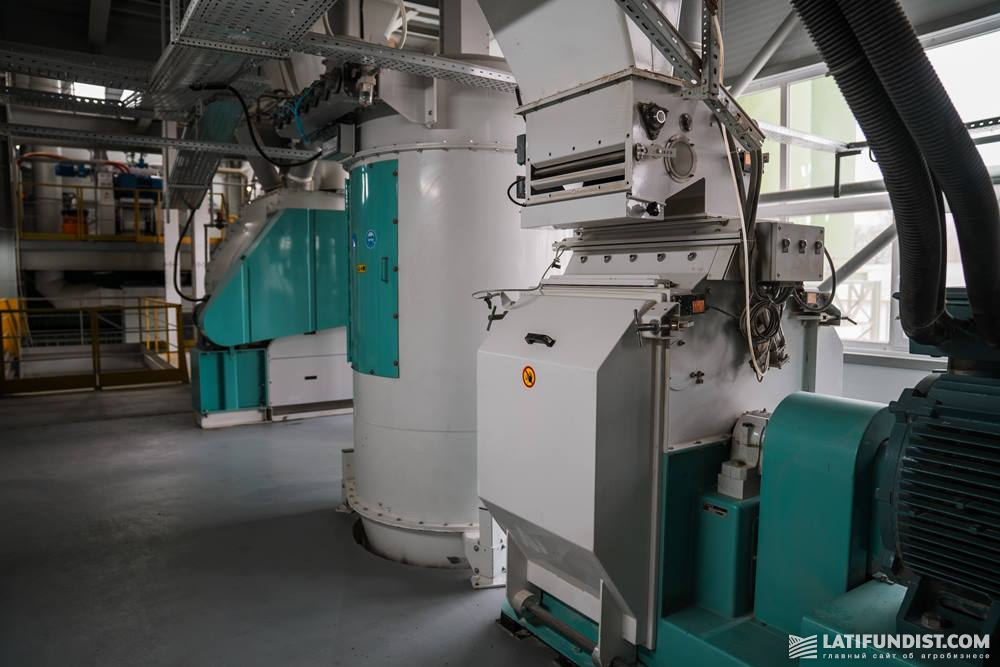
For the production of pelleted feed, a pellet mill from the Dutch company Van Aarsen is used. Its capacity is 25 tons per hour. Sergey Sulima explains that the press is controlled automatically from the control room. The maintenance operator is responsible for the equipment’s reliability.
After pelleting, the compound feed is cooled to a temperature of +/- 5 ºC from the ambient temperature and then sifted to separate the finished pellets from unsuitable residues. The pelleted feed is then packaged, while the residues are sent for recycling. If the pellets need to be further ground into smaller particles, for example, for poultry feed, a grinder is used.
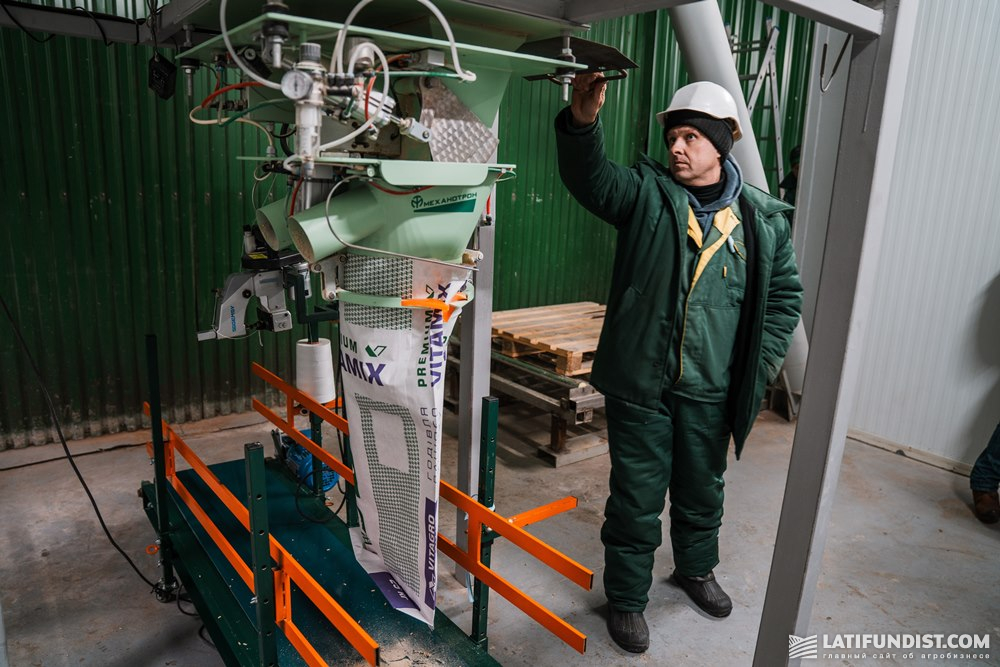
Packaging of the finished product into bags is done with a special packaging machine. The equipment allows packaging up to 10 tons of product per hour. The packaging process is as follows: a bag is placed on the machine, secured, and the operator sets the portion size on the screen (25-30-35-40-50 kg). Then the bag is sealed, and it is conveyed to the exit on a roller conveyor, where it is awaited by a forklift.
Double quality control
We’ve already mentioned that the main technology department oversees all production processes at the plant (component loading, mixing, granulation, temperature control, etc.). However, at the same time, these parameters are monitored by the staff of the operational laboratory, located adjacent to the control room. Thus, the correctness of the feed production process is monitored by two controlling bodies simultaneously.
But that’s not all. The plant also has a modern laboratory where qualitative and quantitative analysis of the final product is conducted. During our visit, the head of the laboratory, Roman Kravchuk, demonstrated how protein content in feeds is determined.
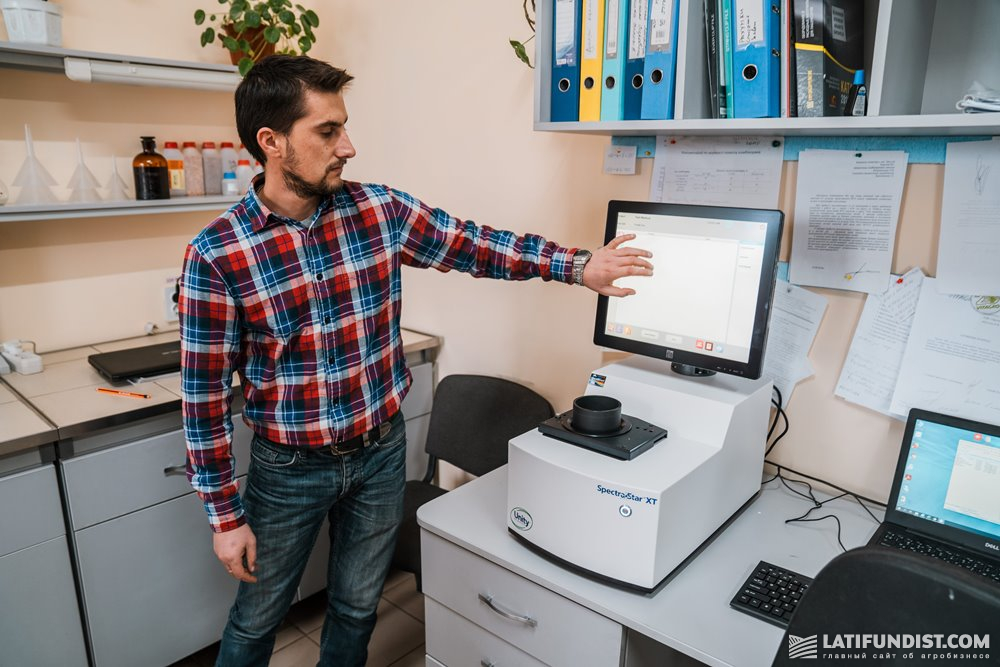
This process consists of 3 stages. Firstly, we prepare the sample by weighing various ingredients and reagents. Based on them, we make a solution. Then we place the tubes with the solution into the registrar, where the combustion process takes place. After that, we remove them and place them in the distillator for distillation. The last stage is filtration. The results obtained during this procedure are recorded, and based on them, we conduct mathematical calculations, which show the final protein content in the product,” explains Roman Kravchuk.
He noted that chemical analysis provides very accurate results, but it is a lengthy process. For example, it takes 5-6 hours to determine protein content using this method. To speed up calculations to 5 minutes, express analyzers are used, with an error margin of just 0.2%. Minimal sample preparation is required; it is placed in the analyzer, and with just two clicks of the mouse, the operator determines the list of parameters, obtains the result, and then decides whether the product meets the required quality.
At the moment, the laboratory equipment allows for research to determine the quantities of protein, fiber, fat, calcium, and phosphorus in products. During the tour of the laboratory, laboratory assistant Nelia Panich was conducting an analysis of phosphorus content on a spectrophotometer. The principle of operation of the device involves passing waves of a certain length through a solution, which is poured into cuvettes. The obtained data is used to construct a graph, and based on it, the quantitative content of phosphorus in the sample is determined.
The head of the laboratory mentioned that they plan to expand the list of studies in the future. In the near future, they want to procure reagents for determining nitrates and nitrites.
Read on the topic Top 10 manufacturers of compound feed in Ukraine 2019
Trust, but verify.
This could have been the end of the story of how product quality is monitored at the plant. However, it turned out that the company regularly verifies the performance of its own laboratory in another company’s laboratory MHP. There, they also commission more complex studies. For example, here they check the amount of protein in soybean meal. In addition, the company collaborates with European laboratories, where they order research that is not conducted in Ukraine. They also work with the Kyiv Institute for Research on the presence of animal DNA in feeds.
We do not use animal protein in our feeds. Therefore, when we procure ingredients from partners that can be falsified, we always check them for the presence of such protein.
Storage of finished products
Now it’s time to find out where the produced goods are stored before reaching the end consumer. For the quick accumulation of finished products, the plant is equipped with 28 silos, each capable of holding 30 tons. In the future, there are plans to install a mirrored battery with 18 silos to increase the total storage volume to 1,000 tons. Additionally, there are floor storage warehouses operating on a FIFO basis (Priority is given to shipping the goods that arrived first.).
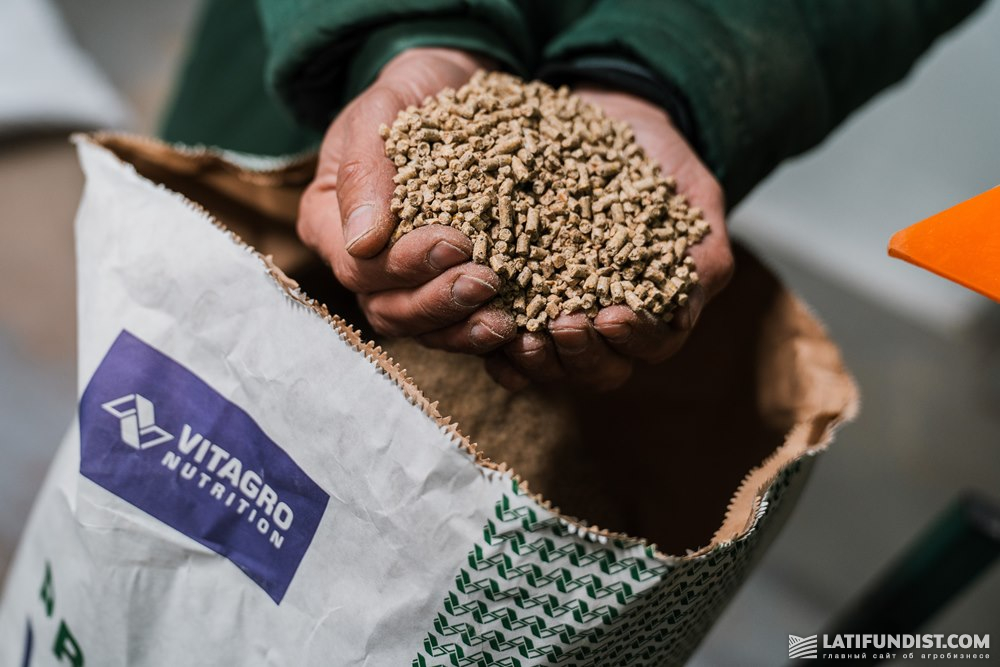
At the same time, Sergei Sulima clarifies that due to ASF and bird flu, the main task was to divide warehouse logistics so that in the production area finished products do not overlap with raw materials. Therefore, raw materials are located in warehouses located on the right side of production, and finished products are located on the left.
“We want to deliver the customer the cleanest and highest quality product possible. Therefore, the finished product goes into the truck immediately after leaving the production complex area. Separate scales and ramps are used. Employees who do not handle raw materials are involved in this process. This way, we avoid cross-contamination of the finished product with the raw materials entering the plant.”
In this modern and high-tech manner, we have seen the production at the VITAGRO Nutrition plant. Although competition in Ukraine’s feed market is fierce today, with such equipment, quality control, and dedication to their work, the company can handle all difficulties.
Natalia Rodak, Latifundist.com