
Heat Stress in Pigs: How to Maintain Productivity During Hot Weather
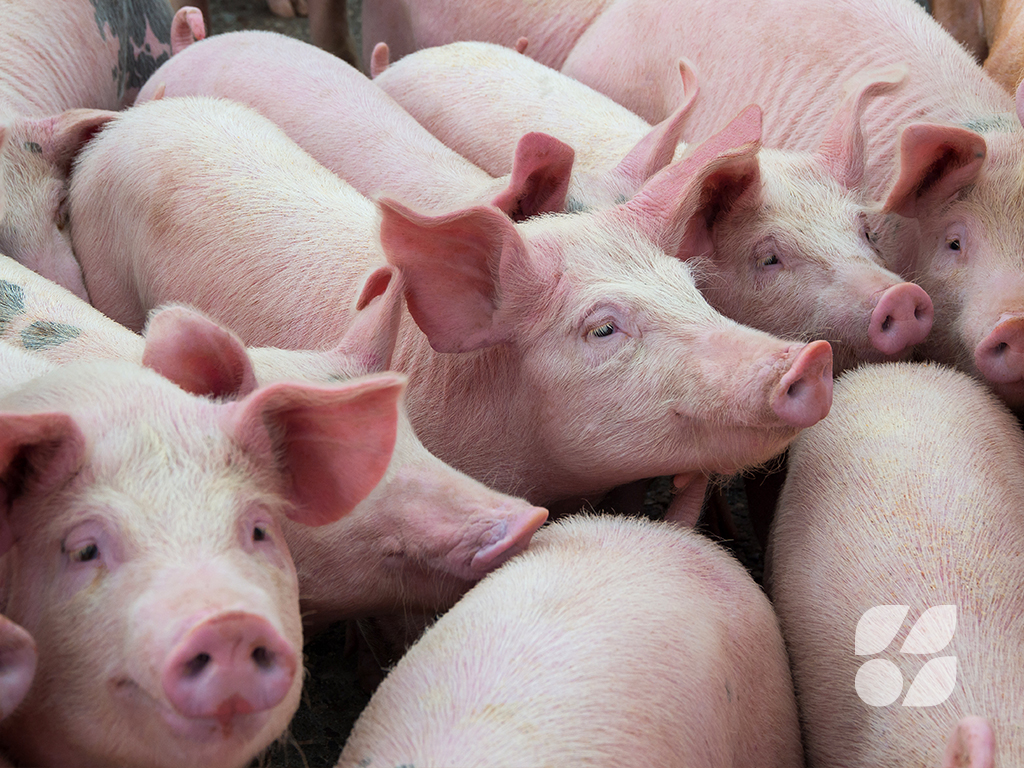
Rising ambient temperatures are becoming an increasingly serious challenge for modern pig production. High-performance pigs are particularly sensitive to heat because their bodies produce significant amounts of metabolic heat while having limited capacity to dissipate it.
Unlike many other animals, pigs have virtually no functional sweat glands. Their primary cooling mechanism is an increased respiratory rate, but its effectiveness is limited at high temperatures.
At temperatures above 22–24°C, high-performance pigs may already begin to experience heat discomfort. As temperatures continue to rise, the negative effects become more pronounced and can lead to reduced feed intake, slower growth, impaired reproductive performance, and deterioration of the animals’ overall condition.
Why Modern Pigs Are Particularly Sensitive to Heat Stress
Over the past decades, the genetic potential of pigs has increased significantly. Modern genotypes are characterized by faster growth rates, a high proportion of lean tissue, and higher feed intake.
Along with productivity, metabolic heat production also increases. This is why high-performance animals find it more difficult to maintain an optimal heat balance during periods of high temperatures.
Scientific studies show that under heat stress, pigs reduce feed intake and the intensity of anabolic processes, including muscle protein deposition. In this way, the body attempts to reduce additional heat production.
As a result, nutrient availability decreases, growth rates and production performance deteriorate, and feed conversion worsens.
Research also demonstrates the impact of heat stress on intestinal function, the hormonal system, nutrient transport, and reproductive function in pigs.
How Temperature Affects Feed Intake and Weight Gain
One of the most noticeable consequences of heat stress is reduced feed intake.
According to a meta-analysis by David Renaudeau, Jean-Luc Gourdine, and N.R. St-Pierre, increasing ambient temperature negatively affects feed intake and average daily gain in growing-finishing pigs.
Animals with higher body weights are particularly sensitive to heat.
What Happens to a Pig’s Body During Heat Stress
Disruption of Acid-Base Balance
At high temperatures, pigs begin breathing more rapidly in an attempt to dissipate excess heat.
Increased respiration leads to more active elimination of CO₂ and a decrease in its concentration in the blood. As a result, blood pH increases and respiratory alkalosis may develop.
Oxidative Stress
High temperatures can also intensify oxidative stress.
Studies of sows kept under elevated temperatures have reported increased oxidative processes during late gestation. Damage to lipids, proteins, and DNA is considered one of the possible mechanisms contributing to poorer reproductive performance.
Therefore, maintaining an optimal microclimate is particularly important for pregnant and lactating sows.
Source: Yan Zhao et al., Asian-Australasian Journal of Animal Sciences, 2020.
How Heat Stress Affects the Pig Intestine
The intestinal tract is one of the organs most sensitive to high temperatures.
To increase heat dissipation, the body redirects part of the blood flow from internal organs to the skin. According to research, visceral blood flow may decrease by 30–50%.
This creates a risk of intestinal ischemia and hypoxia and weakens the intestinal barrier.
At the same time, the concentration of stress hormones, including cortisol, increases, and tight junctions between intestinal epithelial cells may become impaired.
As a result, intestinal permeability increases and nutrient absorption may deteriorate.
Heat stress may also:
- reduce intestinal villus height;
- alter crypt structure;
- impair the absorptive capacity of the intestine;
- disrupt the protective mucus barrier;
- negatively affect the gut microbiota.
Source: Xiaolan Fan, Xue Tian, Mingzhou Li. Challenges of Heat Stress on Intestinal Health in Pig Husbandry, 2025.
The Impact of High Temperatures on the Gut Microbiota
Intestinal mucus is an important part of the body’s natural protective barrier. Mucins are among its key components.
Heat stress may reduce the expression of genes involved in mucin synthesis, contributing to thinning of the mucus layer and weakening intestinal protection.
These changes may also affect the gut microbiota.
In particular, the populations of beneficial bacteria such as Lactobacillus and Bifidobacterium may decrease, while conditions may become more favorable for the growth of Escherichia coli and Salmonella.
Thus, heat stress can simultaneously affect the intestinal barrier, microbial balance, and immune function of animals.
How to Reduce Heat Stress in Pigs
Effective prevention of heat stress in pig production should combine technological and nutritional measures.
Technological solutions include:
- effective ventilation of housing facilities;
- cooling systems;
- fine-mist cooling;
- temperature and humidity control;
- constant access to high-quality drinking water.
However, properly adapting pig nutrition during hot weather is equally important.
Feeding Pigs During Hot Weather: Key Nutritional Strategies
The nutritional strategy during heat stress should focus on maintaining water and electrolyte balance, reducing metabolic load, protecting intestinal health, and combating oxidative stress.
Betaine
Betaine is a multifunctional component used in animal nutrition as an osmoprotectant.
It helps maintain cellular hydration, regulate water movement across cell membranes, and support electrolyte balance.
These properties make betaine a potentially useful component of feed programs during periods of high temperatures.
Vitamins C and E and Selenium
Antioxidant support is an important part of pig nutrition during heat stress.
Vitamins C and E and selenium are involved in the body’s antioxidant system and help neutralize the effects of free radicals.
Antioxidant supplementation may partially reduce the negative effects of heat load on the intestinal barrier.
Vitamin C is also involved in serotonin synthesis and in the functioning of the nervous, endocrine, digestive, and immune systems.
Vitamin E, particularly in combination with selenium, may help maintain intestinal integrity.
Source: Arth David Sol Valmoria Ortega, Csaba Szabó, 2021.
Magnesium
Magnesium can act as a nutritional anti-stress factor.
It is involved in maintaining neuromuscular function and metabolic processes and may help reduce the body’s negative response to stress factors.
How to Adapt Feed Formulation During Hot Weather
When formulating diets for pigs experiencing heat stress, several key areas should be considered.
1. Optimization of energy sources
To reduce metabolic heat production, part of the dietary energy can be supplied through fats instead of an excessive proportion of starch.
One possible approach is to increase the fat content by approximately 1–1.5%.
2. Adjustment of protein levels
Reducing the total level of crude protein while balancing the diet with pure amino acids may be beneficial.
This approach makes it possible to meet the animal’s nutritional requirements while reducing metabolic load.
3. Support of water and electrolyte balance
During periods of hot weather, adequate water intake and maintenance of an optimal electrolyte balance become particularly important.
4. Strengthening antioxidant protection
Higher levels of antioxidant components, including vitamins E and C and selenium, may be incorporated into the diet.
5. Supporting liver function
Comprehensive feeding programs may also include components aimed at supporting liver function and metabolic processes.
Comprehensive VITAMIX ThermoBalance Solution
Vitagro Nutrition LLC has practical experience working with pig farming and finishing operations.
Based on practical experience and modern nutritional approaches, VITAMIX ThermoBalance was developed.
The product combines biologically active components designed to support the physiological functions of pigs and reduce the negative effects of high temperatures.
VITAMIX ThermoBalance can be part of a comprehensive heat-stress prevention program alongside properly managed microclimate conditions, adequate water supply, and adapted feed formulation.
Conclusion
Heat stress in pigs affects more than just animal comfort. It can lead to reduced feed intake, poorer weight gain, impaired intestinal function, increased oxidative stress, and reduced reproductive performance.
That is why heat-stress prevention should be comprehensive.
Combining a properly managed microclimate, adapted nutrition, antioxidant support, control of water and electrolyte balance, and specialized feed solutions can help reduce the negative effects of heat and maintain pig productivity during critical periods.